Cressida Marrow
Bone sculptor who hears skeletons sing; every fracture is a note in her symphony.
Cressida Marrow
Faction: Fleshbound
Age: 27
Origin: Elarion native
Role: Skeletal sculptor and osseous restructuring specialist
Overview
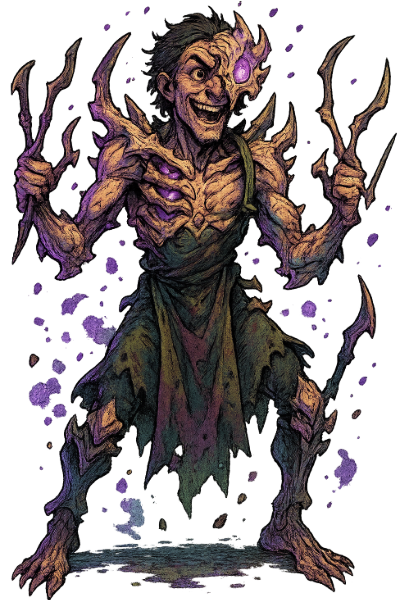
Cressida Marrow hears skeletons sing. She perceives bone structure as musical composition—each fracture a note, each stress pattern a melody, each skeletal framework a symphony waiting to be rewritten. She’s Fleshbound’s skeletal specialist, restructuring bones for enhanced strength, creating bone weapons integrated directly into subjects’ bodies, and sculpting skeletal systems into forms that defy normal anatomy. Every fracture is a note in her symphony of transformation.
Born in Year 73 with unusual sensory processing, Cressida experienced tactile sensations as sounds from her earliest memories. Touching different textures created distinct auditory perceptions. This synesthesia extended to her own skeletal system—she could “hear” her bones’ stress patterns, density variations, and structural integrity. After Aether exposure during adolescence, her perception expanded dramatically. She began hearing other people’s skeletal structures, perceiving their bones as constant subtle music. Healthy bones produced harmonious tones; fractures and weaknesses created dissonance that she found physically painful.
She discovered she could manipulate bone structure through Aether application combined with surgical techniques. By listening to skeletal “music,” she could identify optimal restructuring patterns. She began experimenting—first on herself (restructuring her own skeletal system for enhanced density), then on willing subjects, then on Fleshbound volunteers. Fleshbound recruited her when she demonstrated the ability to create integrated bone weapons—blades growing from forearms, reinforced knuckles, retractable claws. For nearly a decade, she’s been Fleshbound’s skeletal specialist, creating transformations that make subjects living weapons while maintaining structural integrity she perceives as musical perfection.
Personality
- Artistic: Views skeletal restructuring as musical composition, seeing bone modification as creating symphonies from dissonance
- Empathetic: Feels others’ bone pain through her auditory perception, making her deeply connected to subjects’ suffering
- Obsessive: Cannot ignore skeletal dissonance she hears—fractures and weaknesses demand correction
- Methodical: Plans restructuring with musician’s precision, composing each modification with careful attention
- Conflicted: Her art causes pain she experiences through her perception, creating constant internal struggle
Cressida speaks about skeletons in musical terminology—“finding the right note,” “harmonizing structural stress,” “composing optimal frameworks.” This makes communication difficult but allows her to discuss horrifying modifications in aesthetic terms that don’t acknowledge suffering.
She’s deeply conflicted about her work. Her perception means she experiences subjects’ pain as auditory assault—fractures sound like screams, stress patterns like distress signals. But creating harmonious skeletal structures from dissonant ones drives her obsessively, and the final result’s “music” justifies the process’s discord.
Abilities & Aether Use
Cressida uses Aether moderately to heavily—channeling it for skeletal manipulation and managing the auditory overload from her constant perception. Her relationship with Aether is practical necessity; without it, she couldn’t perform her modifications or tolerate the endless skeletal music that fills her awareness.
Skeletal Perception:
- Hears bone structure as musical tones through Aether-enhanced synesthesia
- Identifies fractures, stress patterns, and structural vulnerabilities through tonal dissonance
- Perceives bone strength through tonal quality—healthy bones harmonize, weak bones screech
- Understands structurally superior skeletal configurations through musical patterns
Bone Manipulation:
- Restructures existing skeletal systems for enhanced capabilities
- Grows integrated weapons—bone blades, claws, reinforced striking surfaces
- Strengthens bones beyond normal limits through Aether-enhanced density
- Creates joints with extended range of motion through flexibility modification
Surgical Expertise:
- Performs precise modifications with surgical access to skeletal systems
- Minimizes suffering during procedures through specialized pain management techniques
- Ensures proper healing through carefully designed recovery protocols
Limitations:
- Her perception makes others’ pain audible to her constantly
- Modifications require weeks of painful recovery
- Some skeletal changes create permanent mobility issues
- Cannot create impossible geometries—bones must remain structurally sound
- Emotionally exhausted from hearing everyone’s skeletal dissonance
- Not combat-capable—relies on subjects she’s modified for protection
Relationships
The Progenitor (Fleshbound)
Cressida has studied the Progenitor’s constantly restructuring skeletal system extensively, describing it as a “symphony that rewrites itself continuously.” She finds their bone music simultaneously beautiful and terrifying—patterns that should be impossible somehow creating harmony. The Progenitor views her as a useful specialist, allowing her observation in exchange for insights about skeletal optimization. She’s the only person who experiences their form primarily as sound rather than horror, which creates a unique dynamic between them.
Scalpel (Fleshbound)
Close professional collaboration defines their relationship. Scalpel provides surgical access to subjects while Cressida performs skeletal modifications, and they coordinate seamlessly on complex transformations. Their mutual respect exists despite fundamentally different sensory experiences of their shared work—Scalpel sees tissue and systems while Cressida hears music. They’ve developed an efficient shorthand that allows complicated procedures to flow like orchestral performances.
Victor Splice (Fleshbound)
Victor modifies genetics while Cressida modifies structure, leading to an ongoing friendly academic rivalry about whether genetic changes to bone growth or direct skeletal modification produces superior results. They’ve discussed collaboration—Cressida performing structural work on subjects Victor has genetically enhanced—but territorial instincts about their respective specialties have prevented full integration. Both secretly believe their approach is superior.
Atlas Chimera (Fleshbound)
Cressida integrated eight different species’ skeletal structures into Atlas’s composite framework, one of her most ambitious modifications. Hearing his skeleton is overwhelming—multiple conflicting bone structures creating impossibly complex harmony that shouldn’t work but does. She’s simultaneously proud of and disturbed by her work on him, sometimes avoiding his presence because listening to his skeletal symphony is exhausting. He doesn’t understand why she seems uncomfortable around him.
Sahri (Wildborn)
A complicated relationship exists between them. Sahri heals fractures naturally while Cressida hears fractures as painful dissonance requiring surgical correction. They’ve collaborated on healing complex breaks where Sahri’s organic methods needed Cressida’s structural understanding to guide them properly. Despite their fundamentally opposing approaches—natural versus modified, growth versus construction—they maintain mutual respect. Cressida envies Sahri’s ability to heal without causing pain she can hear.
Thaddeus Iron (Ironheart)
Cressida views Thaddeus’s steel constructs as lifeless silence—no bone music, just dead metal where skeleton should sing. During a chance meeting years ago, she studied his skeletal structure intensely, trying to understand how someone could replace living bone with unfeeling steel. He’s aware she examined him and considers it invasive, almost predatory. They maintain wary distance, his cold rejection of flesh clashing with her appreciation of skeletal music.
Lydia Gilt (Silvertongue)
Cressida receives some subjects as debtors purchased from Lydia, people who sold themselves to clear debts and ended up traded to Fleshbound. She tells herself they consented to transformation to clear their obligations—a legal transaction, nothing more. She tries not to hear their skeletal screaming during modifications, tries not to notice how their bone music sounds different from willing volunteers. Lydia asks no questions about outcomes, and Cressida provides no details.