Catalyst - “The Evangelist”
Faction: Fleshbound
Age: 34
Origin: Refugee (arrived Year 80)
Role: Recruiter and transformation evangelist
Overview
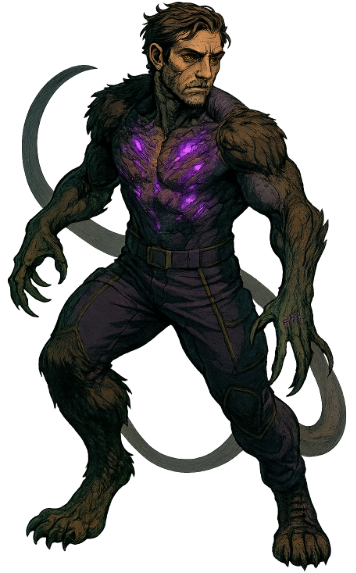
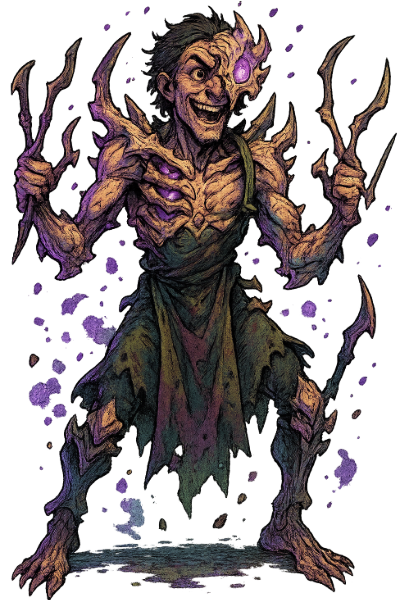
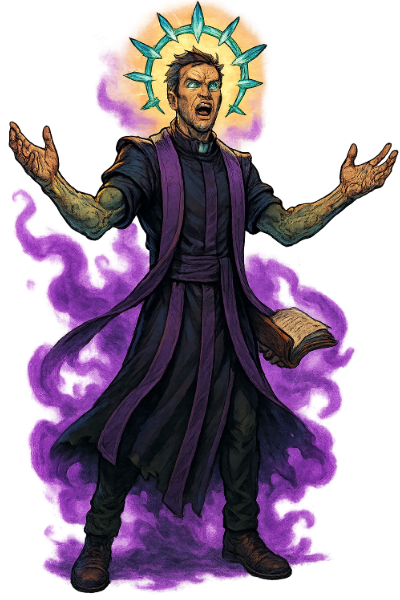
Catalyst believes. Not cynically, not strategically—truly, deeply believes that transformation is salvation. He preaches Fleshbound’s philosophy with fervor, converts willing subjects, and views forced transformation as mercy for those too blind to choose correctly. He was a priest before coming to Elarion. He found his new god in Aether and his new purpose in mutation. His body shows moderate transformation—glowing eyes, crystalline growths, enhanced strength—but his real power is conviction.
Catalyst (he abandoned his birth name upon conversion) arrived in Elarion twenty-five years ago as missionary from an outside religious organization. He came to minister to survivors, provide spiritual comfort, and spread his faith. He found a city where traditional religion had died with social order. Desperate people needed faith but his old doctrines rang hollow against post-apocalyptic reality. He experienced a crisis of faith, questioning everything he’d been taught.
His revelation came during exposure to concentrated Aether while ministering to mutation victims. Instead of horror, he felt divine presence. The mutations weren’t curses—they were evolution. Aether wasn’t corruption—it was catalyst for human transcendence. He underwent voluntary transformation, viewing it as religious conversion. His changes were moderate—glowing crystalline eyes, enhanced strength, bony growths forming crown-like structure—symbolic of his new faith rather than grotesque.
Fleshbound found him preaching transformation as salvation in the Scar twelve years ago. They recognized his genuine belief as valuable—cynical operators could be bought or broken, but true believers converted others through conviction. He leads recruitment efforts, convincing desperate people that transformation offers hope. His success rate is disturbing—many choose voluntary transformation after hearing him speak.
Personality
- Fervent: Genuinely believes every word of his transformation gospel with unwavering conviction
- Sincere: Not manipulating people—he’s trying to save them from what he sees as limitation
- Eloquent: Speaks with preacher’s passion, using religious language and metaphor effectively
- Troubled: Capable of doubt when confronted with transformation’s victims, though he always recovers
- Dangerous: Performs monstrous acts while genuinely believing they’re righteous mercy
Catalyst speaks with preacher’s passion, using religious language and metaphor. To him, Aether is divine gift, transformation is holy sacrament, and resistance is sin against evolutionary destiny. Despite his fervor, he’s capable of doubt. Certain encounters—particularly with Neriah, who disturbed him with stories of transformation victims’ death-screams—shake his faith temporarily. He always recovers but the doubts linger.
He views forced transformation as mercy—if people won’t choose salvation voluntarily, he’s saving them from their own ignorance. This makes him dangerous; he performs monstrous acts while genuinely believing they’re righteous. He’s troubled by the Void Prophet, whose very existence suggests transformation might not be universal destiny. If some things are meant to remain unchanged, his entire theology collapses.
Abilities & Aether Use
Catalyst consumes Aether faithfully and regularly as part of his religious practice, granting him unusual resistance to its negative effects. His body tolerates transformation better than most, allowing moderate enhancement without the grotesque mutations that afflict less devoted converts.
Persuasive Faith:
- Genuine belief in transformation theology makes him extraordinarily persuasive
- People feel his conviction and question whether he might be right
- Understands psychological vulnerabilities and religious needs
- Converts willing subjects through persuasion rather than force
Moderate Transformation:
- Glowing crystalline eyes serving as otherworldly presence
- Crystalline crown-like growth as deliberate religious symbolism
- Enhanced strength from controlled mutation
- Living advertisement for “successful” transformation
Limitations:
- Power is entirely social—no combat abilities beyond moderate enhanced strength
- His faith makes him predictable to those who understand his theology
- The Void Prophet’s presence causes his faith to falter painfully
- Certain individuals (like Neriah or Kor Emmer) resist his conversion attempts completely
- Cannot accept that transformation might not be universal salvation
Relationships
Neriah (Veilwalkers)
Catalyst attempted to convert Neriah, viewing her connection to the dead as incomplete transformation requiring completion. She countered not with argument but with death-whispers from transformation victims—people who died screaming after forced mutations, whose final moments were agony rather than transcendence. For the first time in years, his faith faltered. He still hasn’t fully recovered from hearing those voices, though he’s rationalized them as “incomplete conversions” rather than evidence against his theology. She represents his deepest doubt given voice.
Malice Corvid (Silvertongue)
Malice interviewed Catalyst for one of her disturbing broadcasts, expecting to expose manipulation and cynicism. Instead, his genuine fervor came through unsettlingly—viewers saw a true believer rather than a con artist. The interview went viral, paradoxically increasing both Fleshbound recruitment (from those attracted to his conviction) and opposition (from those horrified by it). She’s fascinated by his sincerity and has interviewed him multiple times since.
Sahri (Wildborn)
Catalyst tried to convert Sahri, viewing her blood magic as primitive version of transformation—natural Aether manipulation awaiting elevation through deliberate mutation. She was horrified by his philosophy and rejected him completely, seeing his forced transformations as violation of the natural change she facilitates. Their theological conflict runs deep: she believes change must be organic and chosen, he believes it must be directed toward specific transcendence.
Kor Emmer (Wildborn)
Catalyst views Kor Emmer as living proof that transformation is divine—natural mutations over 132 years resulting in perfection without external intervention. He considers Kor a saint of his religion, evidence that Aether-driven change leads to transcendence. Kor finds this veneration deeply uncomfortable and has repeatedly refused Catalyst’s requests for theological discussions. The irony that Kor’s changes were gradual and natural while Catalyst’s are forced and immediate escapes him.
Void Prophet (Veilwalkers)
The Prophet’s existence deeply unnerves Catalyst. The Prophet’s void philosophy directly contradicts transformation theology—suggesting some things should remain unchanged, that emptiness has value, that not everything needs to become something else. Near the Prophet, Catalyst’s faith falters visibly. He avoids the Prophet when possible and has never attempted conversion, afraid of what the conversation might reveal about his own beliefs.
Chrysalis (Fleshbound)
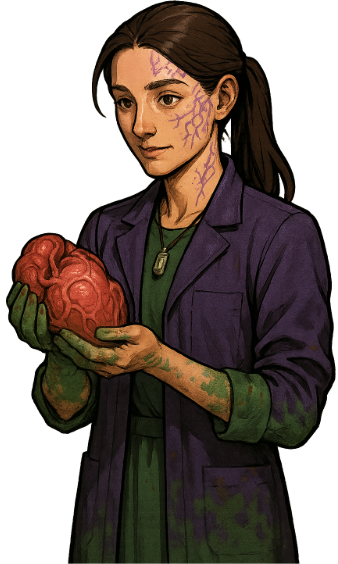
Catalyst genuinely believes he can help Chrysalis embrace her transformation fully. He sees her intact psychology not as failure but as opportunity—a mind that survived transformation but hasn’t yet accepted its gift. His conversion attempts are sincere, gentle, and relentless, trying to help her find meaning in what she’s become rather than mourning what she was. To Chrysalis, these conversations are torture—she must fake appreciation while suppressing revulsion at philosophy that celebrates what was done to her without consent. She pities him for finding meaning in something so monstrous, while he pities her for resisting the liberation he genuinely believes transformation offers.